
BIRDHOUSES
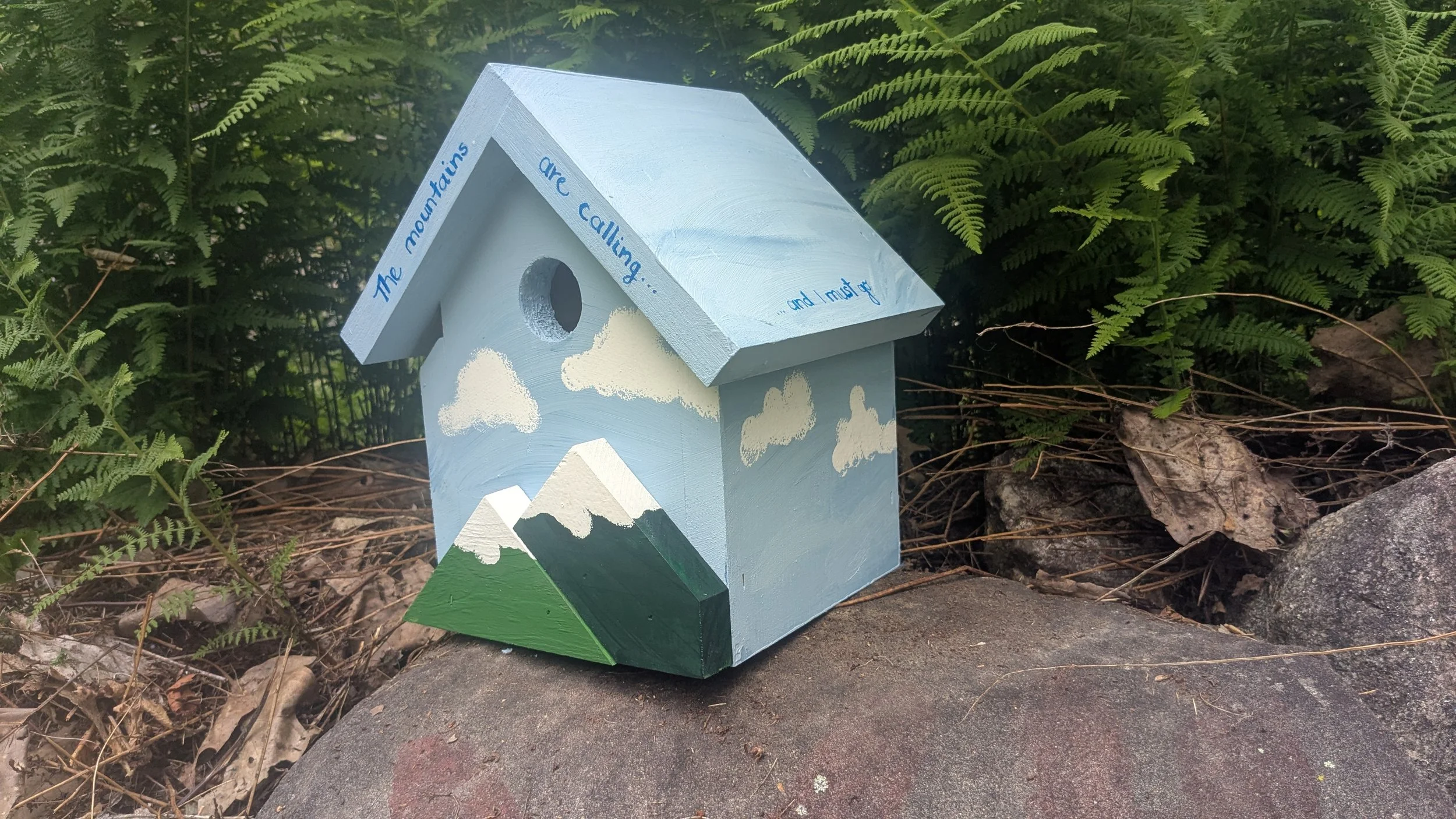
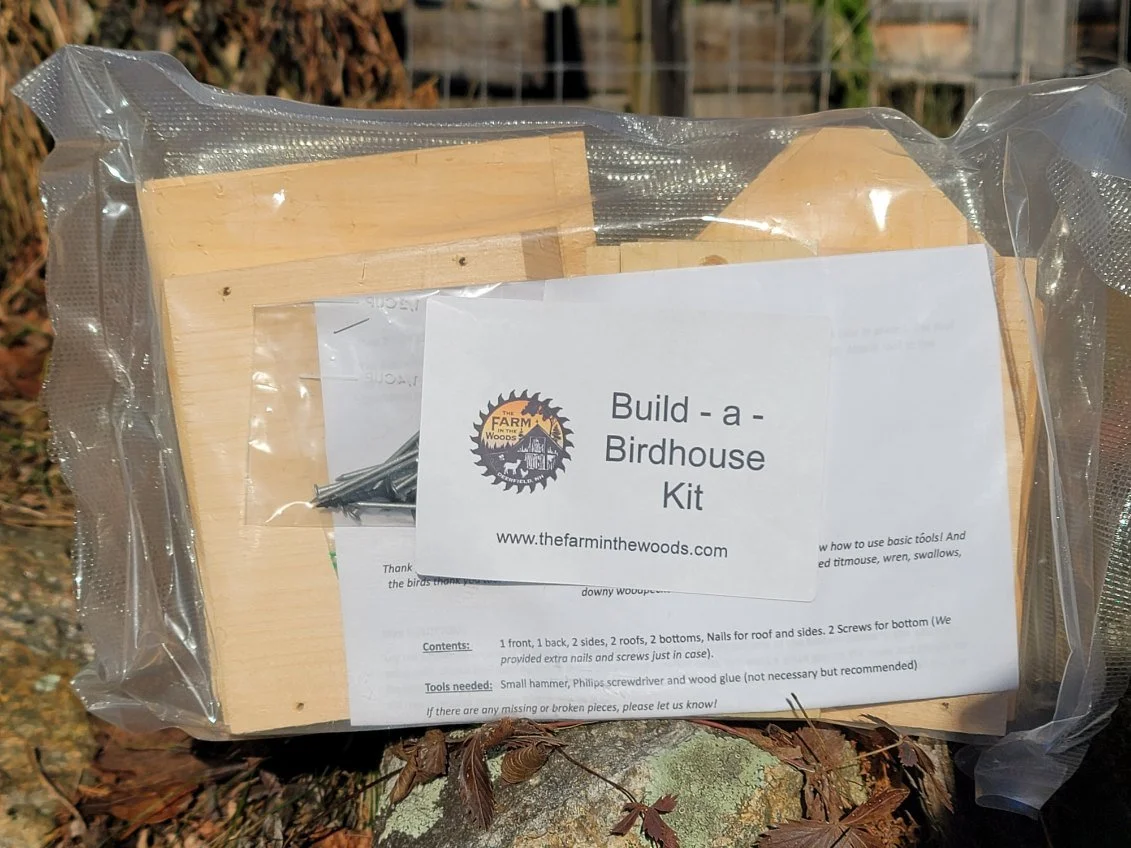
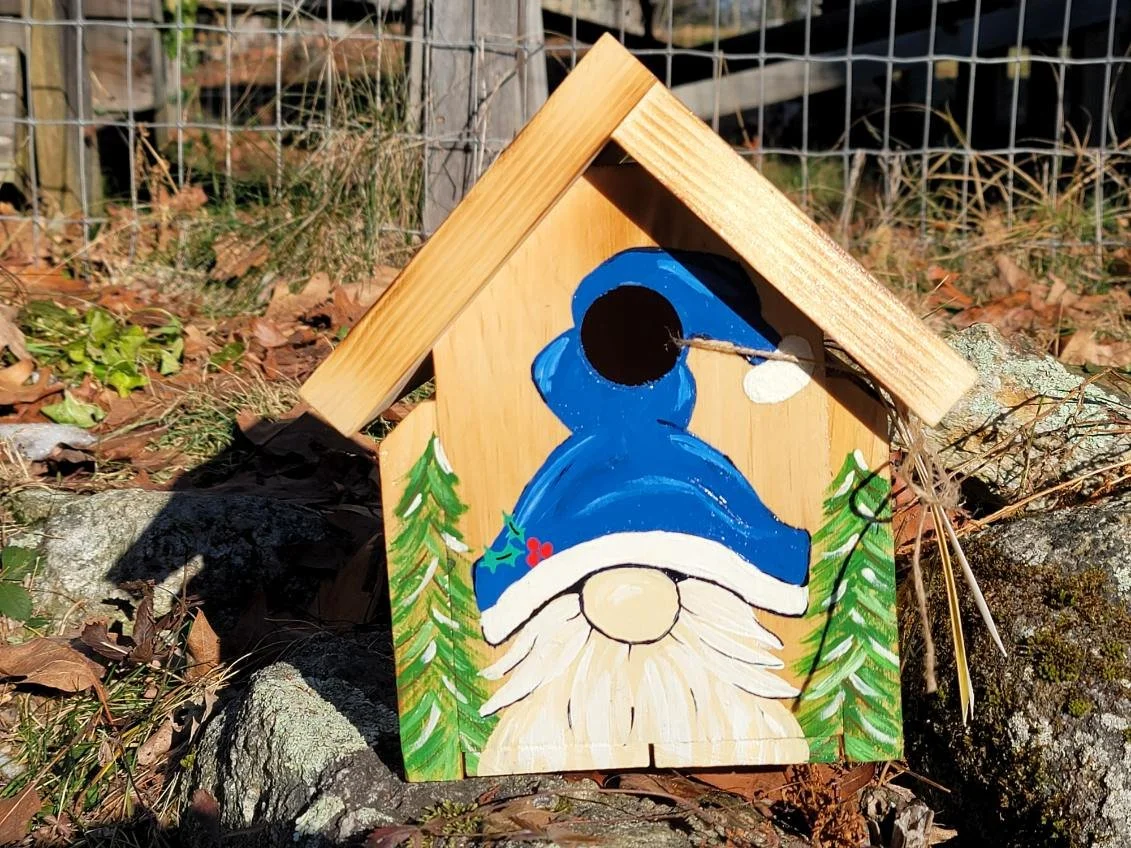
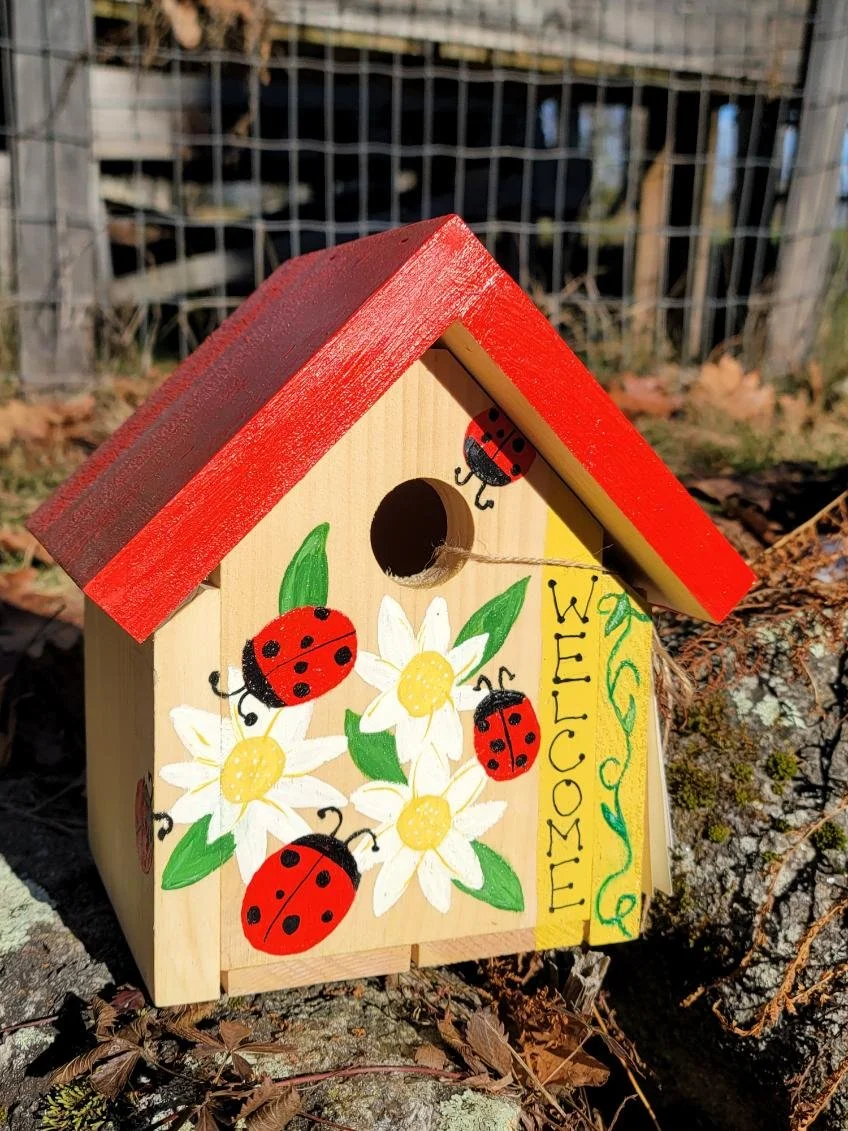
Our birdhouses are both beautiful and functional and will last for years to come. We use exterior paints and spar varnish for weather protectant. These birdhouses are designed and built for the tree swallow, warbler, sparrow and white breasted nuthatch. Made with NH white pine, your birdhouse is made to last with good drainage, it can be easily hung or mounted, has easy clean out, and excellent ventilation.
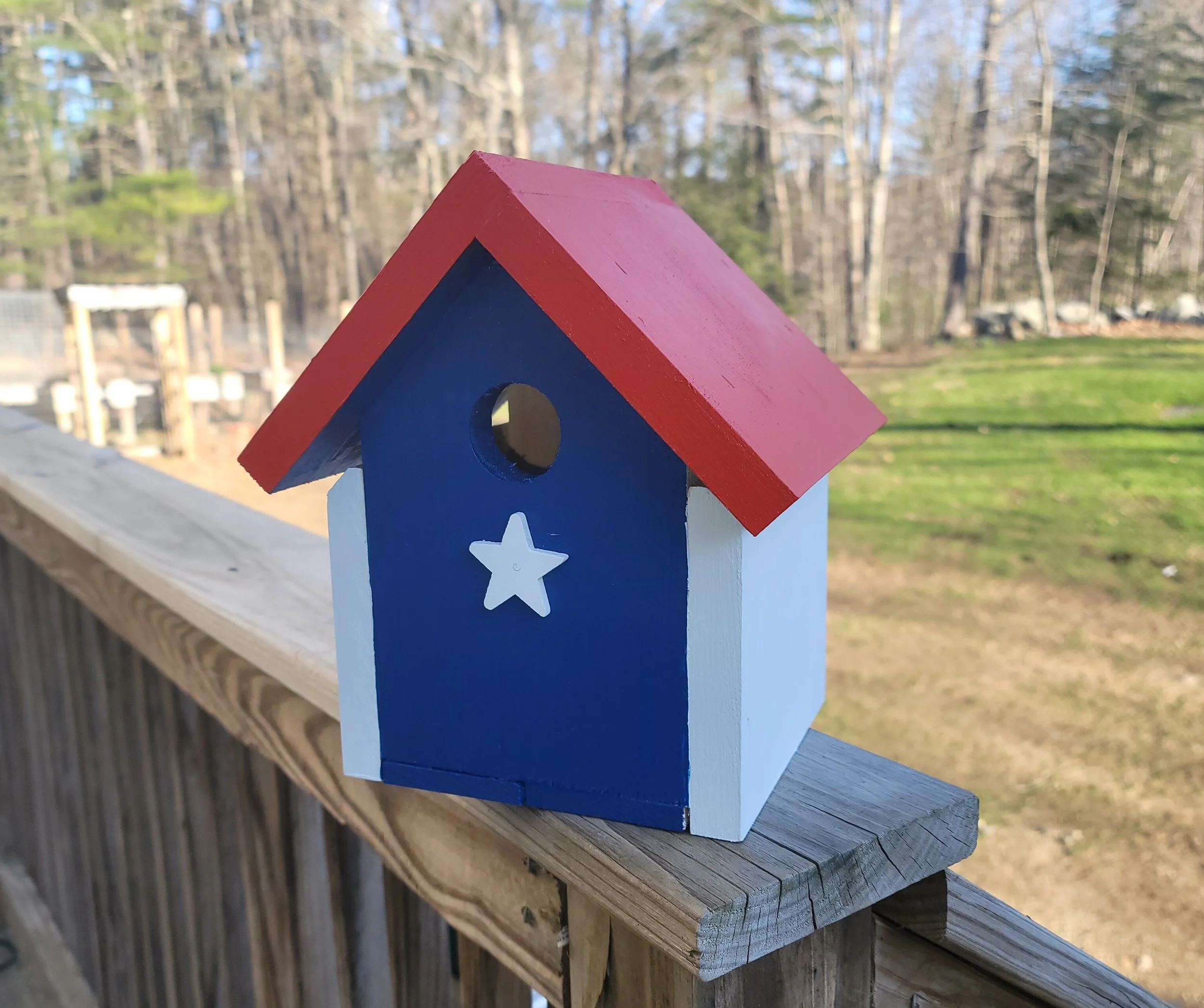
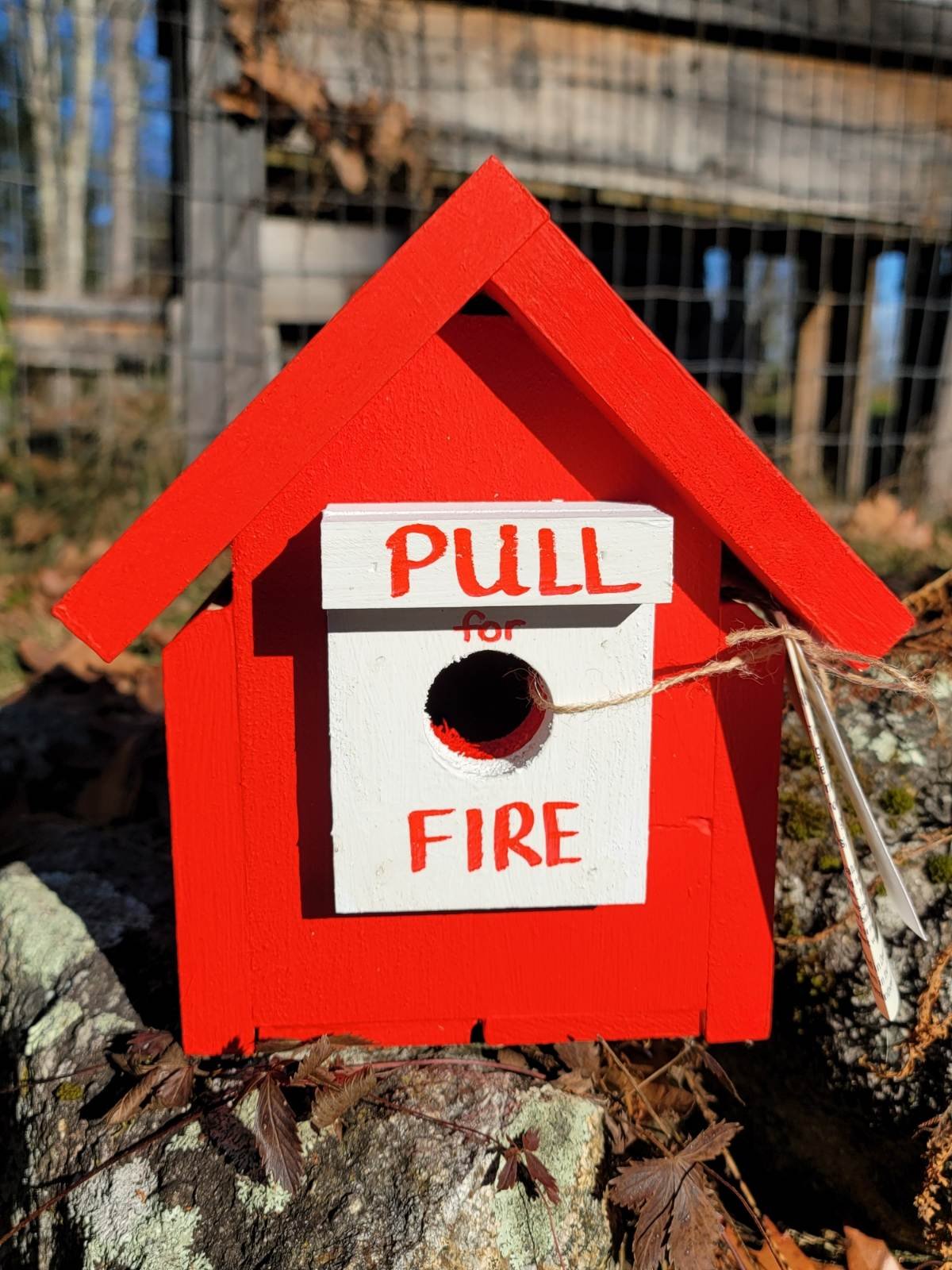
“Jake" is slang for Firefighter, used almost exclusively in New England, and bestows great praise & respect. To be called a "Good Jake" is one of the best compliments that a Boston area firefighter can receive from a peer. Our Salty Jake is in honor of the many generations of Smiths, our family, who are great Jakes, we love them dearly.
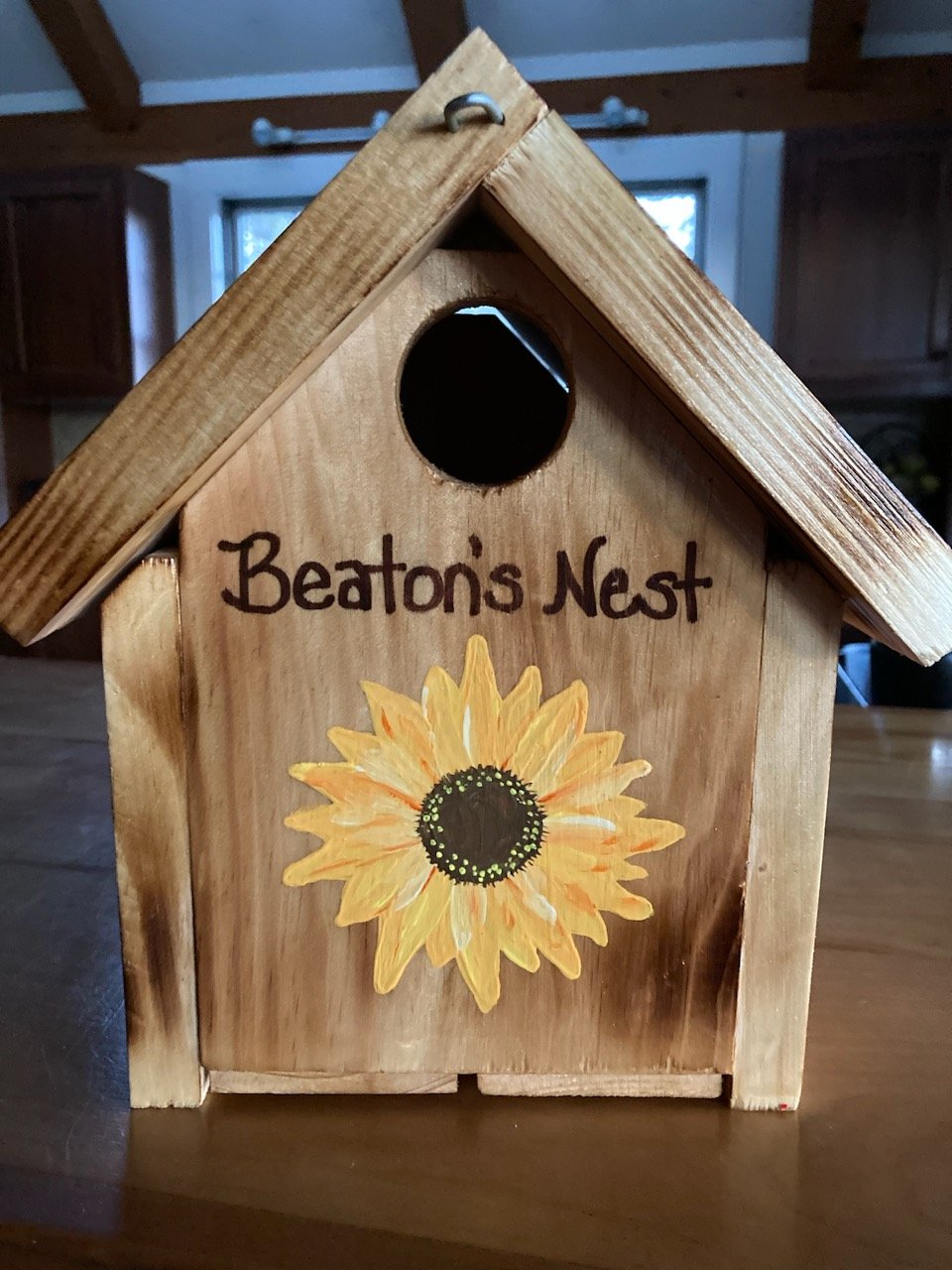
Sunflowers make the best seed buffet for birds in late summer to early fall. For longer harvest time, stagger your planting, early spring to midsummer. This way, you can attract birds for months. You can also gather your sunflower heads, put them in a dry place to dehydrate & hang them out by your feeders, extending the sunflower season all the way into fall.

“Jake" is slang for Firefighter, used almost exclusively in New England, and bestows great praise & respect. To be called a "Good Jake" is one of the best compliments that a Boston area firefighter can receive from a peer. Our Salty Jake is in honor of the many generations of Smiths, our family, who are great Jakes, we love them dearly.
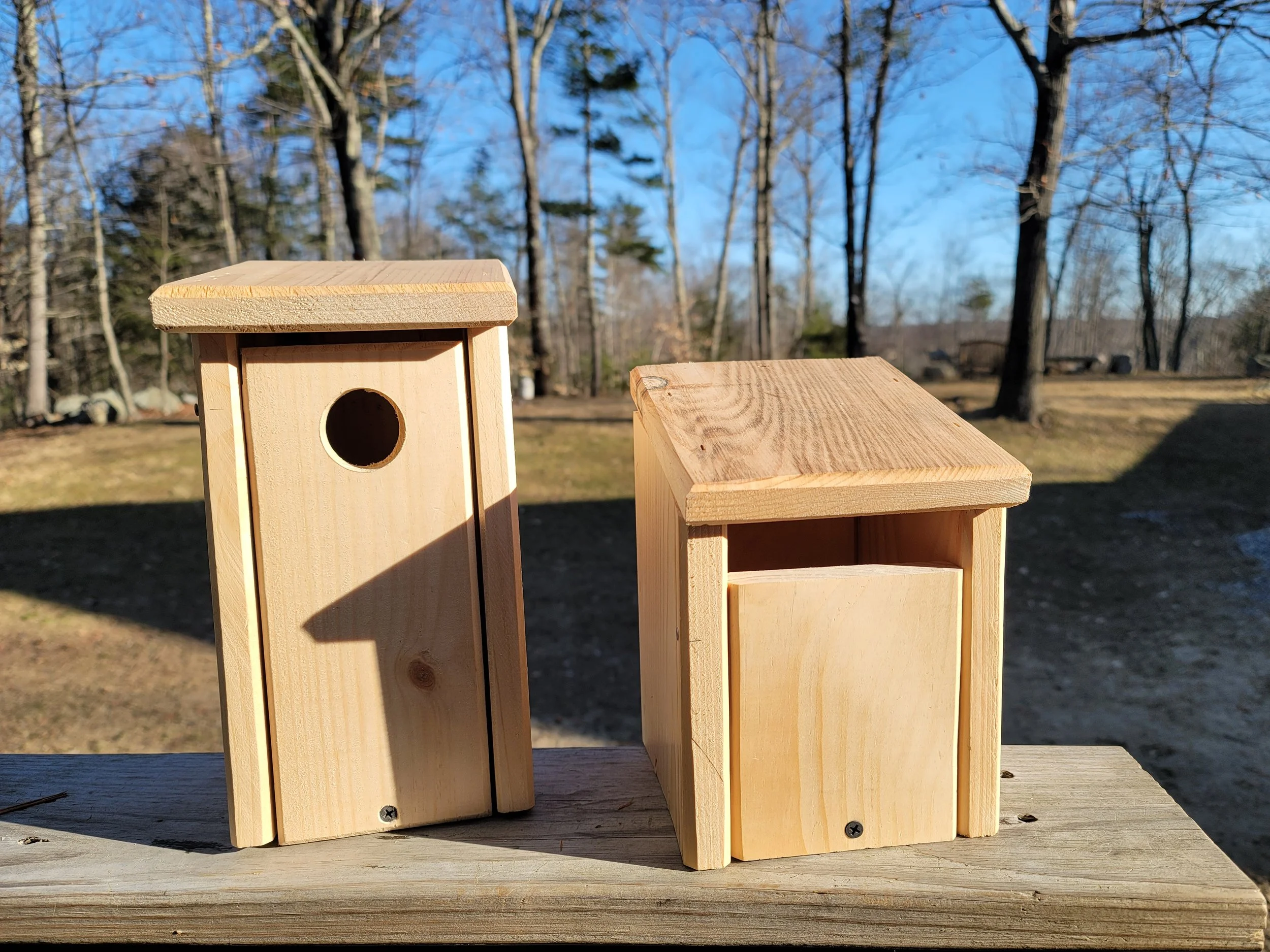
Our Uncle was a foreman for a large cranberry grower on Cape Cod. He put bluebird houses on his cranberry bogs in the 1990s. After his passing in 2010, we learned from a state biologist that his actions were instrumental in bringing the Eastern Bluebird back to Eastern Massachusetts. In honor of his love for all nature, we named this birdhouse after Uncle Bobby.
Please specify Eastern or Davis style
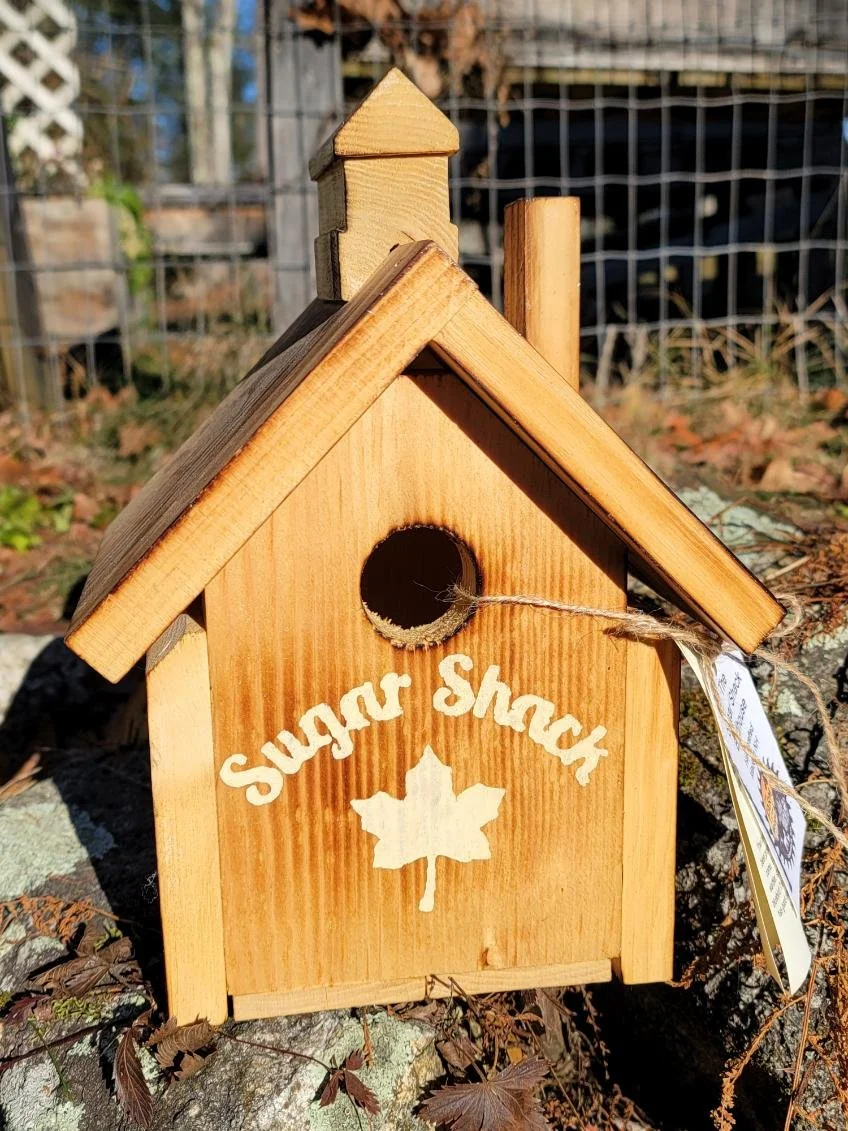
Maple syrup sugar shacks are found all over New Hampshire! Smoke billows and sweet maple-scented air abounds from February to April each year. NH maple producers average 90,000 gallons of syrup in a season, all depending on the weather. We tap trees here on our farm each winter with the hopes of having enough syrup for pancakes all year ‘round!

It was just a matter of time before two of our worlds collided! We love our bees, and we love our birdhouses. Mr. Farm in the Woods started beekeeping in 2016 and our apiary started with 2 hives and now is up to 8! This birdhouse is dedicated to all the small beekeepers out there trying to keep bees alive and our food sources thriving. Save the bees!!
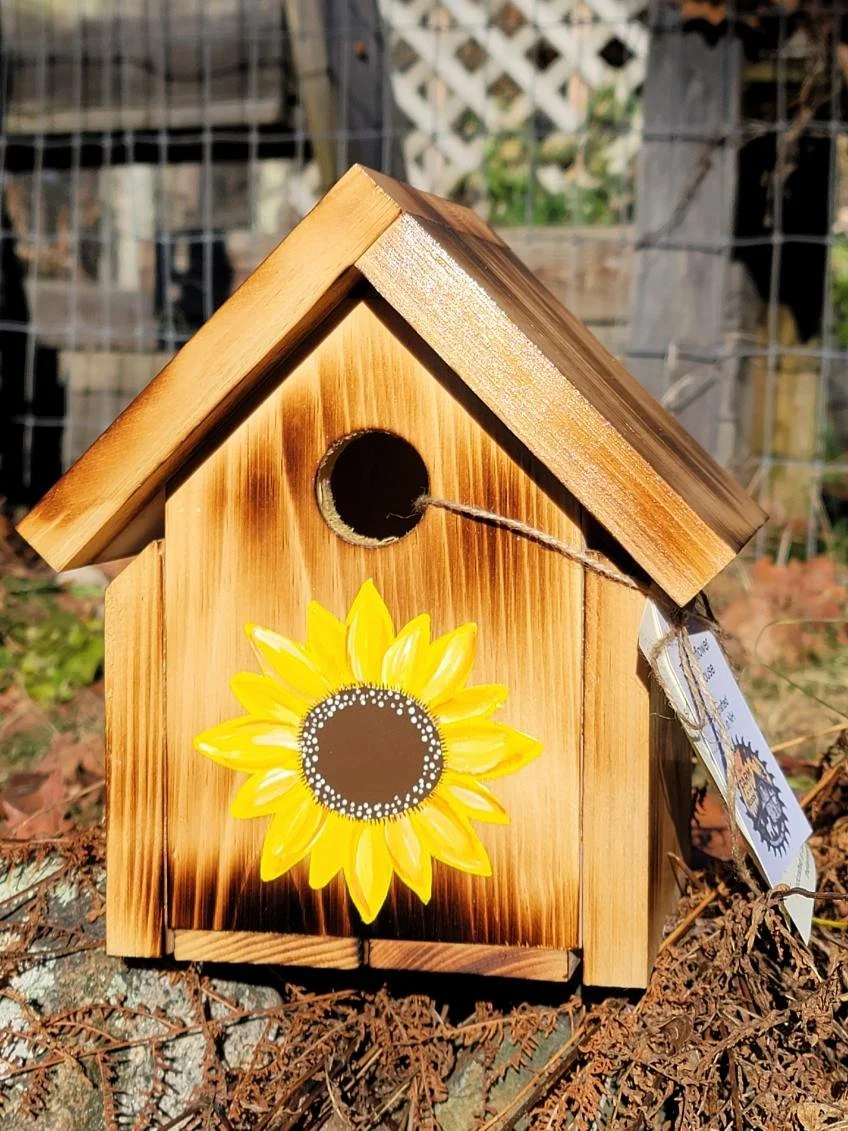
Sunflowers make the best seed buffet for birds in late summer to early fall. For longer harvest time, stagger your planting, early spring to midsummer. This way, you can attract birds for months. You can also gather your sunflower heads, put them in a dry place to dehydrate & hang them out by your feeders, extending the sunflower season all the way into fall.
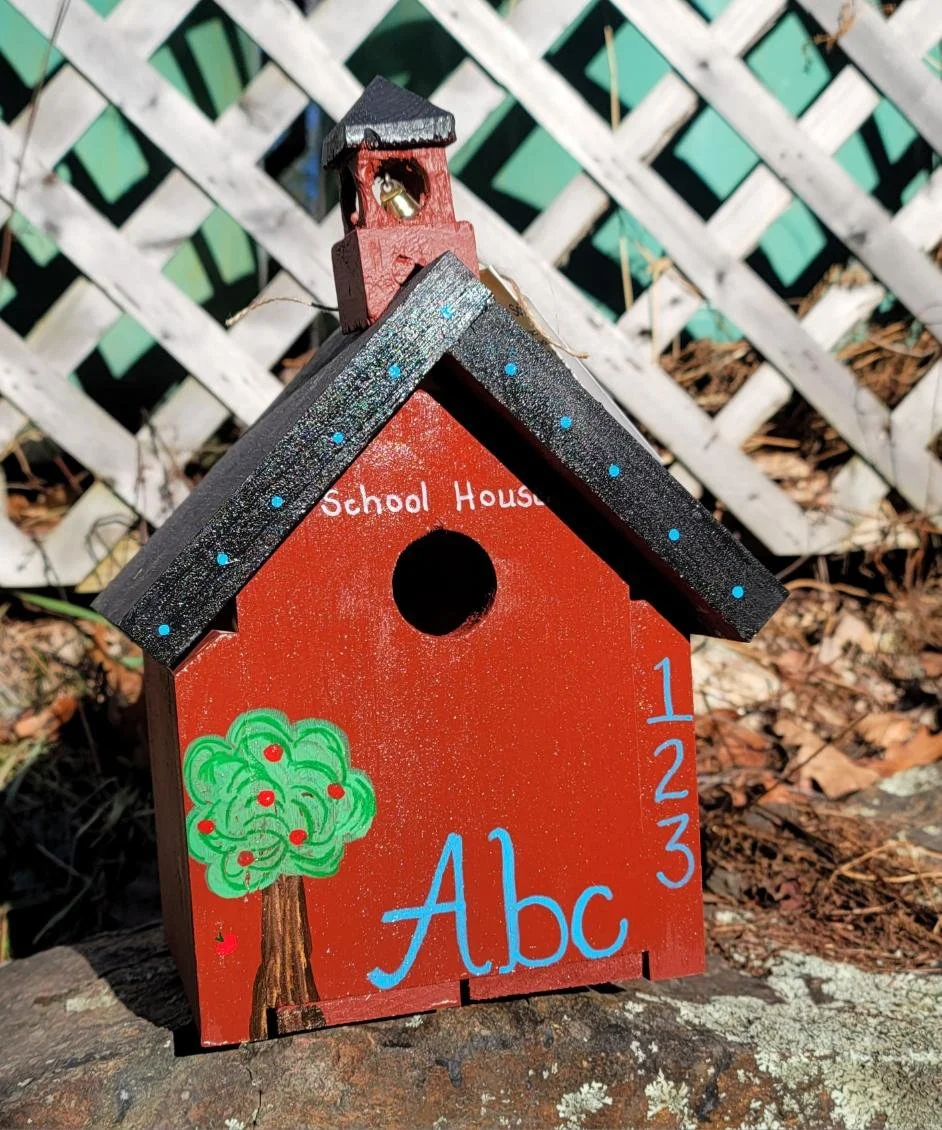
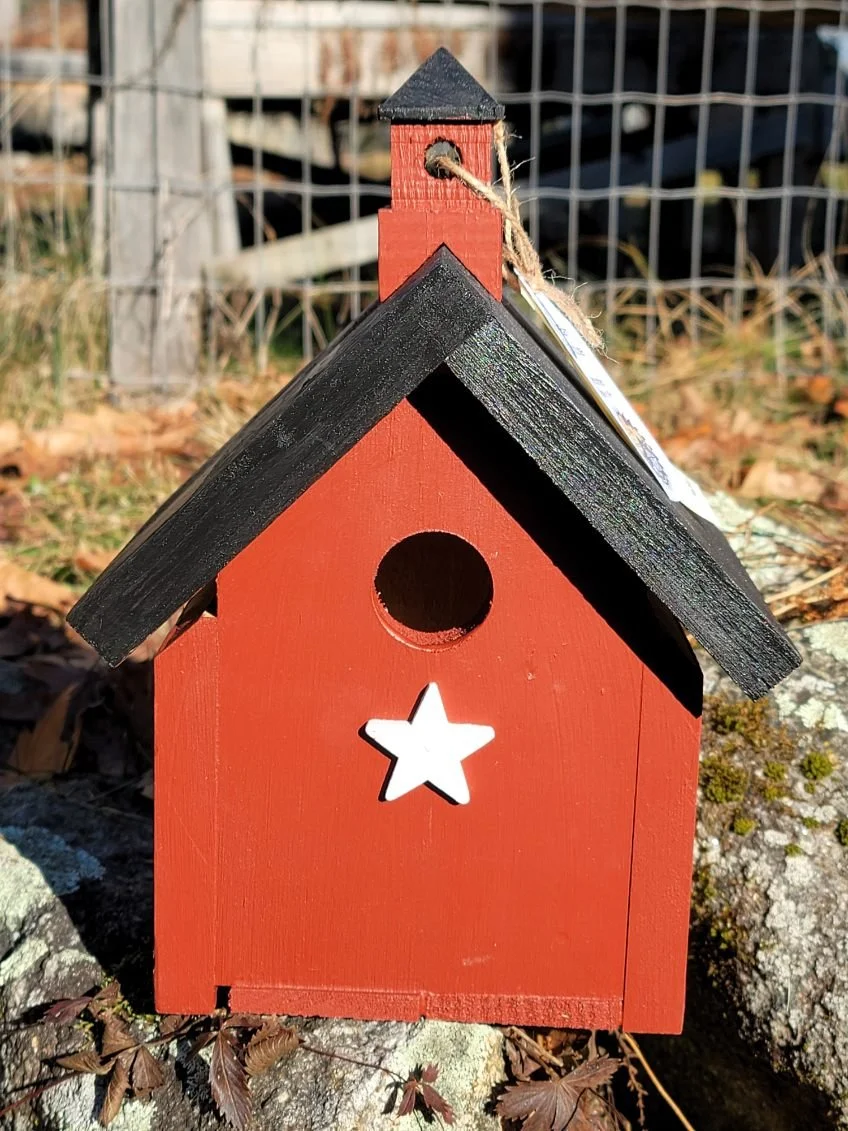
One-Room School Houses date back hundreds of years. The Red School in Croydon, NH reports to be the longest continuously operating one-room school house, in use since 1794! The thought of walking five miles, uphill both ways, in the snow, may be a legend, but the one-room schoolhouses our ancestors spoke of, is not. In New Hampshire, there are 7 one-room school houses that may be closed, but historical societies have preserved them for visitors.
New Hampshire Settlers began building log homes in the 1620s. They stacked tree trunks on top of each other and made corners that interlocked by putting notches in the ends. The style of the notches had to do with the settlers' ethnic background. Your log cabin birdhouse is our tribute to those early NH settlers, who risked everything to make their home in a new place.

The country church is seen in small towns across New Hampshire, from the seacoast to the great north woods. Some churches date back to the 1700s when our country was in its infancy. Churches were often used as meetinghouses, where town business would take place.
Hundreds of New Hampshire's historic barns have survived severe weather, westward migration, suburban sprawl and more. Often connected to other farm buildings and the farmhouse, they had many uses. Historic barns sheltered dairy cows, teams of oxen, horses, hay and crops.